Capriccio, in Luxembourg
“Desires are already memories.” - Italo Calvino

“Desires are already memories.” - Italo Calvino
I don’t think that there’s just one Luxembourg. I think that there are as many Luxembourgs as there are minds and souls that have passed through it and experienced it.
I think that’s the same for any other city or place in this world. There’s more to a place than geography and the tangible: memory, imagination, and experiences bend and twist and grow or shrink a city to their liking.
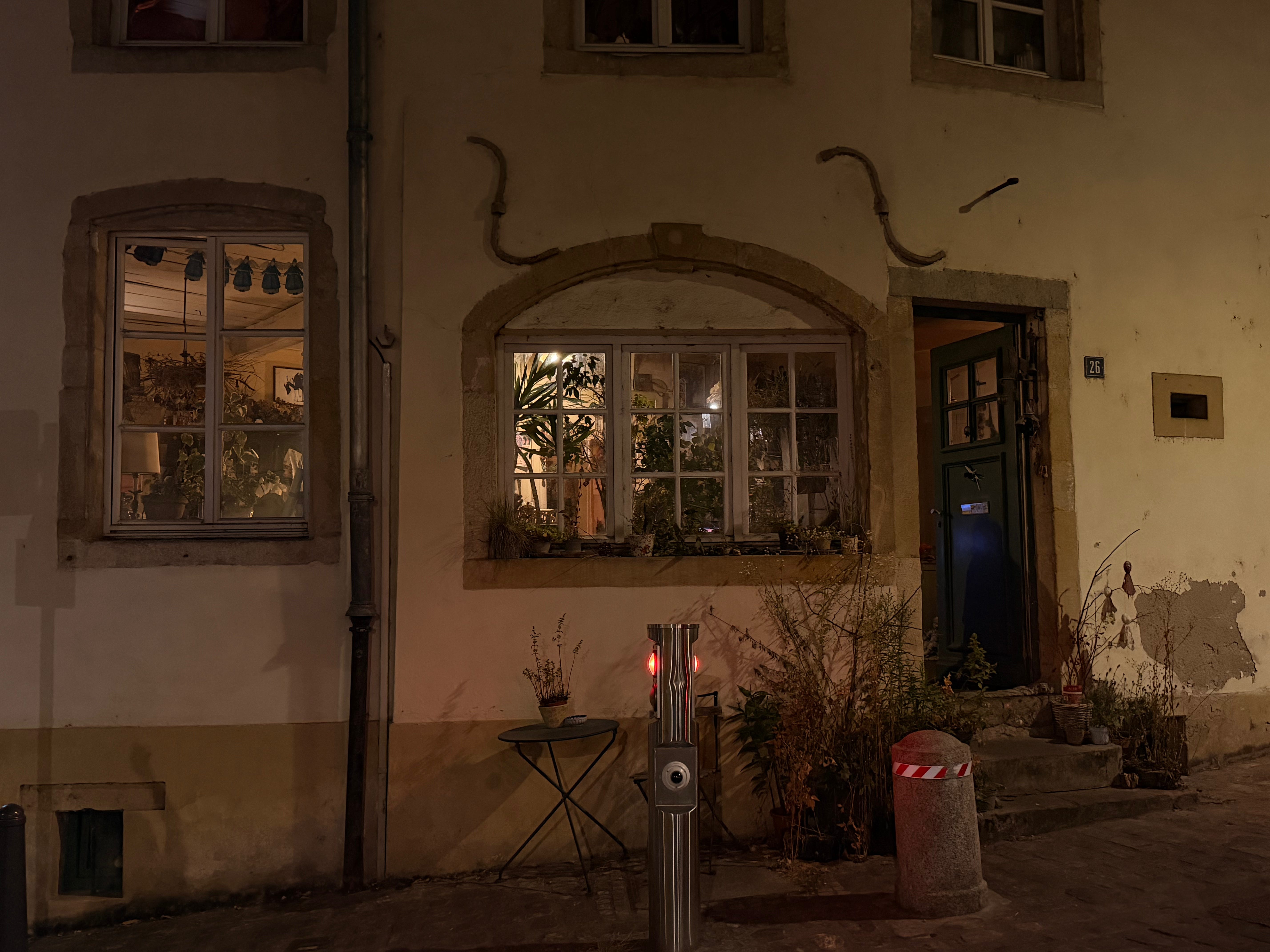
Perhaps in a few years I’ll forget the delicious dishes we tried at Batucada, or the paragraphs from Margaret Atwood’s Surfacing that I read in a copy I came across on a bookshelf on a street, or the lady at the market who didn’t let me touch those nectarines, but I will clearly remember that house at 26 Rue Laurent Ménager, which I couldn’t take my eyes off on that late summer night.
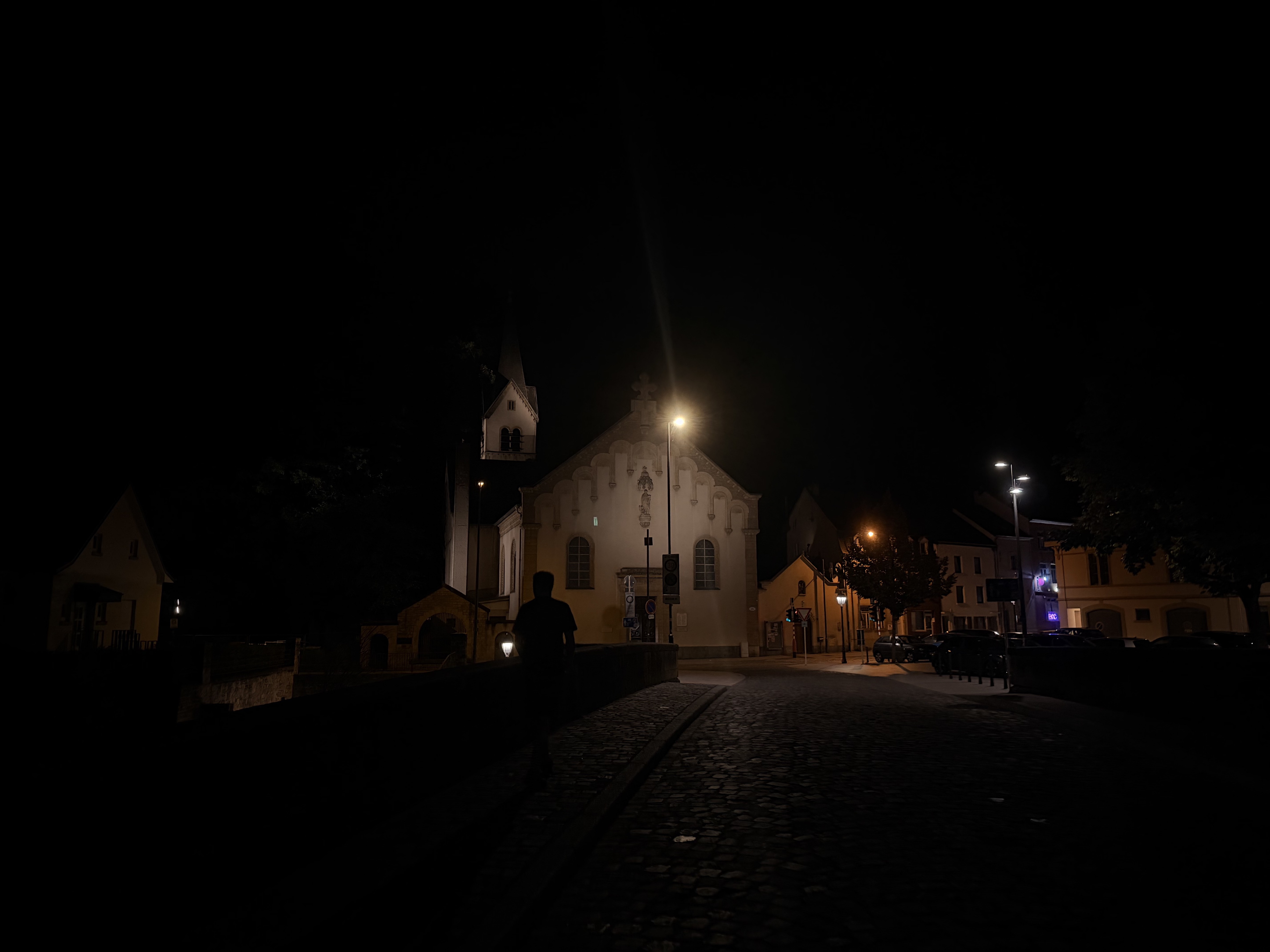
As we took the elevator to reach the other part of the city, I felt immediately immersed in a new, older world. The late hour and the golden streetlights added to the tranquil atmosphere. I was drawn to huge wooden doors, the emptiness of those streets at that hour, and the slower rhythm of a place that seemed almost hidden in plain sight.


And as we made our way back toward the elevator, I saw the house: a corner house with warm light coming from within, an abundance of plants, a shape and a colour that were nourishing to the eyes, and an older man with a black dog, standing in the doorway and having a conversation with a guest, with the door wide open.
My reaction in the moment was to strike up a conversation with the older man who I assumed was the owner of that house, but the hour, close to midnight, and the division between public and private life made things feel a bit inappropriate, especially without a good reason. However, looking back, I had quite an interesting reason: I felt a big pull towards that house, its aesthetic, and its stories. It felt grounding and expansive at the same time, unlocking parts of my imagination that keep searching for the “magical”.
The next day I returned to see the place and the house in the daylight. I was still very much drawn to it, so it wasn’t, after all, the yearning of the midnight hours or the otherworldly light of the lamps that made me see the world differently.
I wish there were a word for the inexplicable pull that a particular place can bestow on us. In English we can use the pull of a place to try to describe that. In Italian there is richiamo, the call, the pull, the attraction of a place, il richiamo di un luogo. In Spanish there is querencia: an inclination or attachment that draws someone or an animal toward a particular place. But this already implies that an attachment has been formed.
Is there, though, a word for quick, urgent fascination with a place? Something that just literally falls from the sky as we walk through a new city?
After returning home, I chose to break the spell of the place and Google it, to investigate what’s special about it. However, after some brief research, I found that house even more fascinating. Since 2005, the address has been the registered headquarters of Katarxis Urban Workshops, a Luxembourg nonprofit focused on architecture and urbanism that are, in its own formulation, “living, complex and sensitive”. The president of the association is Lucien Steil, a Luxembourg architect whose work is strongly centred on traditional architecture, humane cities, beauty, craftsmanship, and a sense of place.
This finding in itself made me form a closer attachment to that place and understand my experience more clearly, but as I continued researching, I came across “architectural capricci”, which felt like a revelation to me. Lucien Steil’s idea of the architectural capriccio is much richer than simply drawing imaginary buildings. It is almost a philosophy of how places can be imagined, and he uses this technique as a design method, combining drawing, memory, imagination, and a collage of different experiences.


The word capriccio is even more interesting because I think it can capture that feeling I couldn’t find a word for:
“It. Capriccio, generally untranslated, even though Eng. also Whim, Fancy, Caprice; Fr. Caprice; Germ. Laune; Span. Capricho.
An authentic neologism of the Middle Age language, documented as from the latest 13thcentury, “Capriccio” is one of the most polysemic word in the Italian lexicon, and a significant term of the Art Criticism vocabulary mostly between 16th and 18th century. Among its synonyms are, for instance, “Sudden desire”, “Inconstant behavior”, “(Free) Fantasy”, “Inspiration” and even – in the form of “raccapriccio” – “Revulsion”, “Horror” (Battaglia 1962: 727-729; Cortellazzo, Zolli 1985: 1064).
It is interesting to note that this richness embraces very different (and even opposite) meanings, that probably come from a complex etymological history.”
Seeing that house on that summer night felt like seeing more than a house. It was a collage of experiences combined in one place. It was like a house that could exist in sacred dream, in memories, and physically as well, on the corner of a street in Luxembourg, or elsewhere in the world.
However, looking back, I think that the experience of this place goes beyond the satisfaction of recognizing something instinctively and bonding with it without prior knowledge.
This place, and many others in the world, show what architecture that is beautiful, living, sensitive, and complex can do to our human minds and hearts: we bond, we form connections, we dream with our eyes wide open in the real world.