


“The sense of that crack in reality between what is and what might be, my father passed on to me [...] It may be the crack where books and songs are born.”
— Walter Benjamin at the Dairy Queen, Larry McMurtry
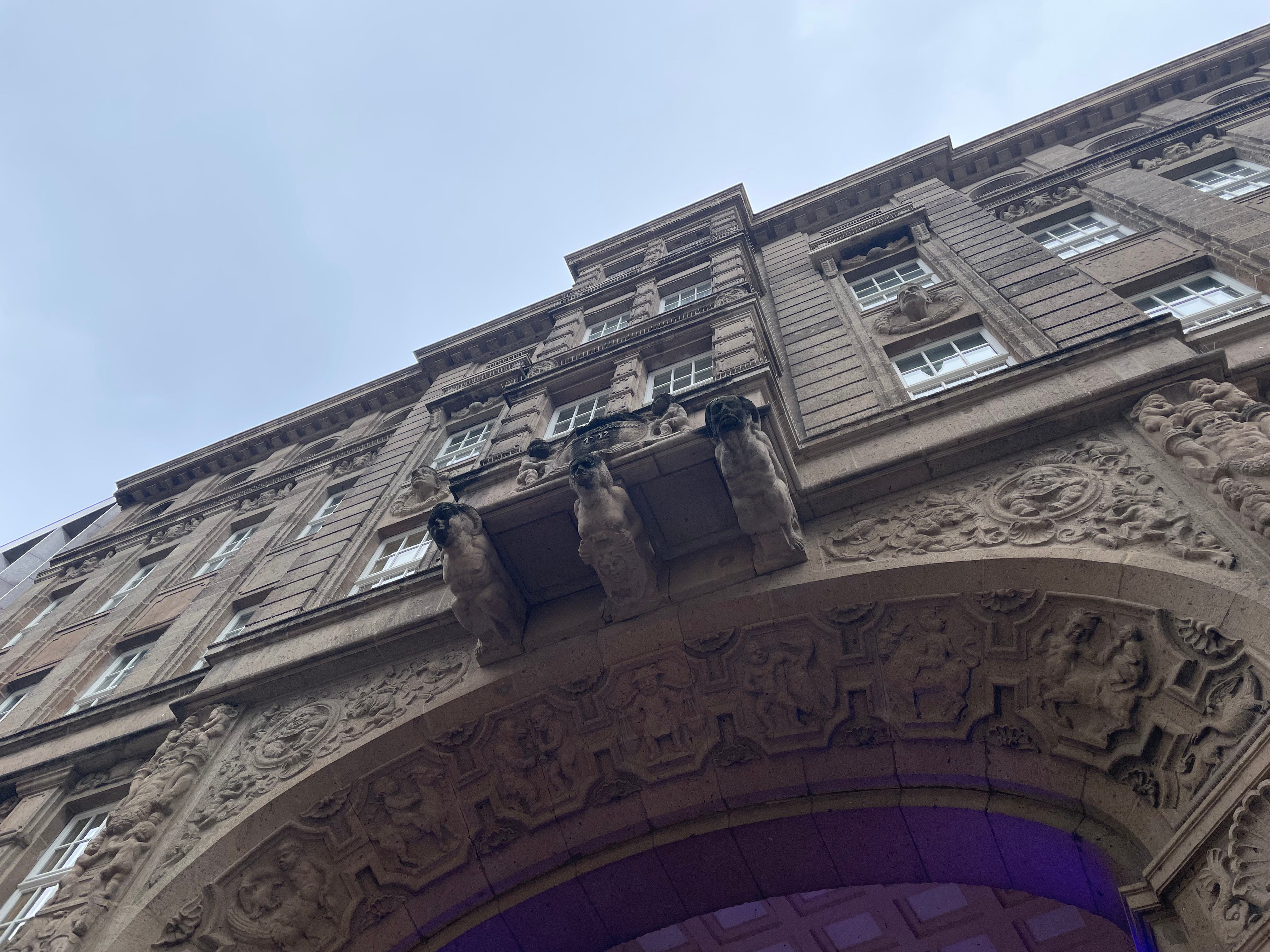

The weather couldn’t have been more oppressive that February morning as we headed on a train to Dortmund. Across from me, a bumper sticker on the dirty, blurred window of the NS train defiantly stated, “enjoy the moment.” As we crossed the German border, the pressure didn’t lift; it felt as if an enormous grey cloud was still enclosing the sky and the earth for miles to come.
I don’t think we would have ever visited Dortmund if it weren’t for Hélène Grimaud’s concert. The city was not able to animate us; the layout of the city felt like a maze, one in which, no matter the direction we took, we always ended up in the same place. I walked the city slowly in anticipation of Grimaud’s concert, remembering a few lines from her book Leçons particulières1, which always provided solace and relief, especially during times of tension related to my relationship with writing and its mediums.
The environment around us, the buildings, the shape of the streets, even the grey pressing clouds, shapes how we perceive a place, how we walk through a city. I think that online mediums have the same effect on our writing, eventually. I started this newsletter and The Flâneurs Project because I am very sensitive and attuned to urban places, and I think this sensitivity extrapolates to online places as well.
Platforms such as Substack are no longer just mediums of expression; they are also environments in which we create. And those environments can distort attention and box imagination in certain ways, depending on a variety of factors. This is nothing new. I think it’s a topic shared quite frequently in these times, but I also think that I didn’t actually understand my tension clearly all these years. Ultimately, this lingering tension led me to step away from Substack for some months, and to disengage permanently from other online places.
The problem was not writer’s block. Writing simply is. Writing flows out of contact with reality and inner worlds; for a writer, writing is home itself. Nor was it the medium of expression, but rather making writing subordinate to the medium. What made me feel more free and agentic, and therefore more likely to write and share, to jolt myself back into writing, was remembering that writing belongs to life, not to the platform.
There are a few writers who helped me in this process of focusing more on the movement of writing than on the mood induced by the medium. In particular, there’s a concept called “creative indifference,” coined by the German writer and philosopher Salomo Friedlaender (Mynona). In his 1918 work Schöpferische Indifferenz, he suggests that active selfhood requires both “pure inwardness” and will. But inwardness, if it remains passive, is not yet fully alive; it must first be shocked into movement. What he calls creative indifference is therefore not an escape from the world, but a condition of inner freedom from which a person can act in it more powerfully.
In my case, my inner freedom was realising that writing is agentic regardless of where it ends up: in a note, in a journal, on a napkin, or eventually on a Substack page, or published in a printed magazine. In other words, if I think and I write, I am already “shocked into life,” because my inwardness (thinking) is translated and bridged into movement (writing). Previously, I only recognised movement or agency if my writing was ultimately shared online, and that was the tension from which I couldn’t escape.
Another writer who rewired how I look at writing, its mediums, and ultimately the rewards of thinking and expression is Václav Havel, a Czech playwright, dissident, and later president. Deep into my hibernation months, back in January, I started reading Letters to Olga, a collection of letters Havel wrote to his wife while imprisoned between 1979 and 1983. The letters touch on a variety of subjects - from his thoughts on freedom, theatre, food, his health problems, to what he reads in prison - and they are living proof that one’s thinking and writing can remain free and agentic even in more oppressive environments.
Havel’s medium of expression was the letter, and even though he was required to write within certain constraints, as his letters could be read and judged by prison guards, he remained, in some ways, inwardly free. He wrote openly and frequently, following where his thoughts brought him, sharing them candidly with his wife. In one of his last letters before he was set free, he wrote:
“[…] these meditations of mine: they are a defeat because in them I have neither discovered nor expressed anything that hasn’t already been discovered long before and expressed a hundred times better—and yet they are, at the same time, a victory: if nothing else, I have at least managed, through them (overcoming more banally exterior and profoundly interior obstacles than I would ever wish upon anyone who writes anything), to pull myself together to the point where I now feel better than when I began them. It’s strange, but I may well be happier now than at any time in recent years.
In short, I feel fine and I love you—
Vašek”
Writing belongs to life, to thinking, to people, to interpreting and reinterpreting the world. The medium in which we share is not an external authority, as long as we can act within it from a point of creative indifference.
In my case, I jolted myself back into writing when I recognised that the medium in which I can reach that “creative indifference” is the plain piece of paper, or the blank page earthed in a folder on my laptop.
If the writing is ultimately shared at some point in another place, that’s not the point. The point is that I thought and I wrote in a place in which I could be free.

Leçons particulières by Hélène Grimaud is written in French and, to my knowledge, has no official English translation. I came across a Romanian edition, and translated into English a passage I keep returning to:
“I often feel the absence of my Master; more and more, I find myself wanting to thank him for the lesson he gave me along the path of life: that doubt is essential, and also the very key to overcoming it.
— Doubt about what?
— About oneself. It comes from a deep desire to interpret—and more than that, to do so in a way that hasn’t yet been matched.— And what key did he place in your hands?
The answer came to me almost on its own:
— A constantly renewed trust that there is no better reason to hope, and to study, than this very desire.
Was my companion convinced by this thought? There was no need to ask.
— I can think of none more fitting, he said. And we continued on.”
I've been struggling with writing "publicly" in the past few months. Your piece resonated. You are right, I think, that we deceive ourselves into mixing up the medium and the act. I somehow feel like there is a hierarchy of sorts. Yes, I can write a few lines in the corner of a notebook, or in my diary, but it will somehow feel less worthy than a published piece. I really needed to read this!