

Of Nebulous Places

“Perhaps places are for me what books were for my mother? They are altogether full of promise. They assuage some of the regret for all the lives I never had. What is out there will be my partner. What I write about it will be the record of the relationship.”
— Nuala O’Faolain, Are You Somebody?

My mind became as clear as cold, fresh water as I watched the hills and houses move past, the sheer vastness unfolding quickly before my eyes.
“It looks like Arizona,” I heard Carole say as the car carried us deeper into the remoteness of the Romanian countryside, closer to the borders with Ukraine and Hungary, on an early summer night.
The landscape enveloping us, the orange-pink horizon, the faint shadows of countryside homes and streetlights, and the road moving hypnotically beneath us sparked something ancient and comforting within me. For a few minutes, I felt at peace, dipping my toes into relief.
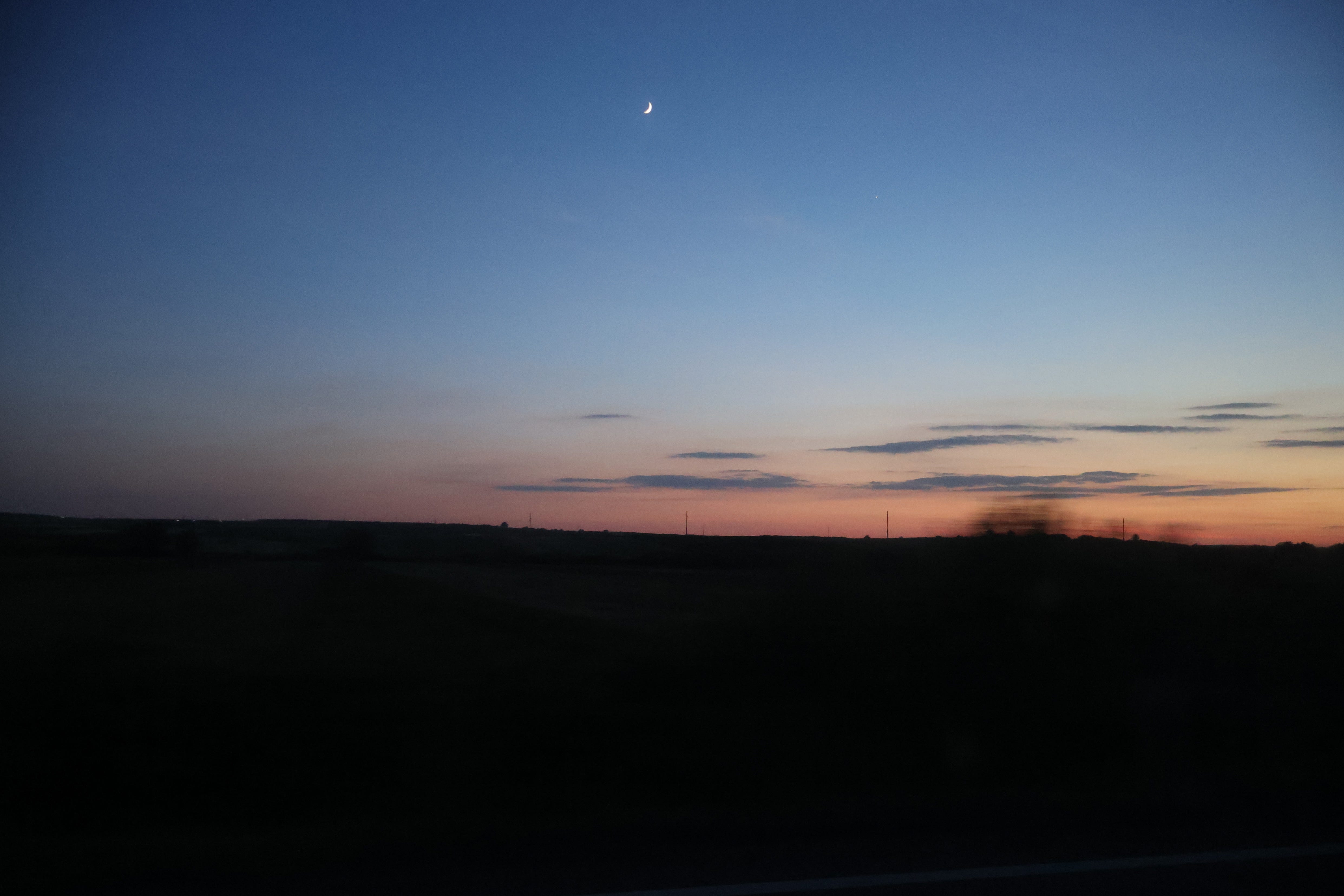
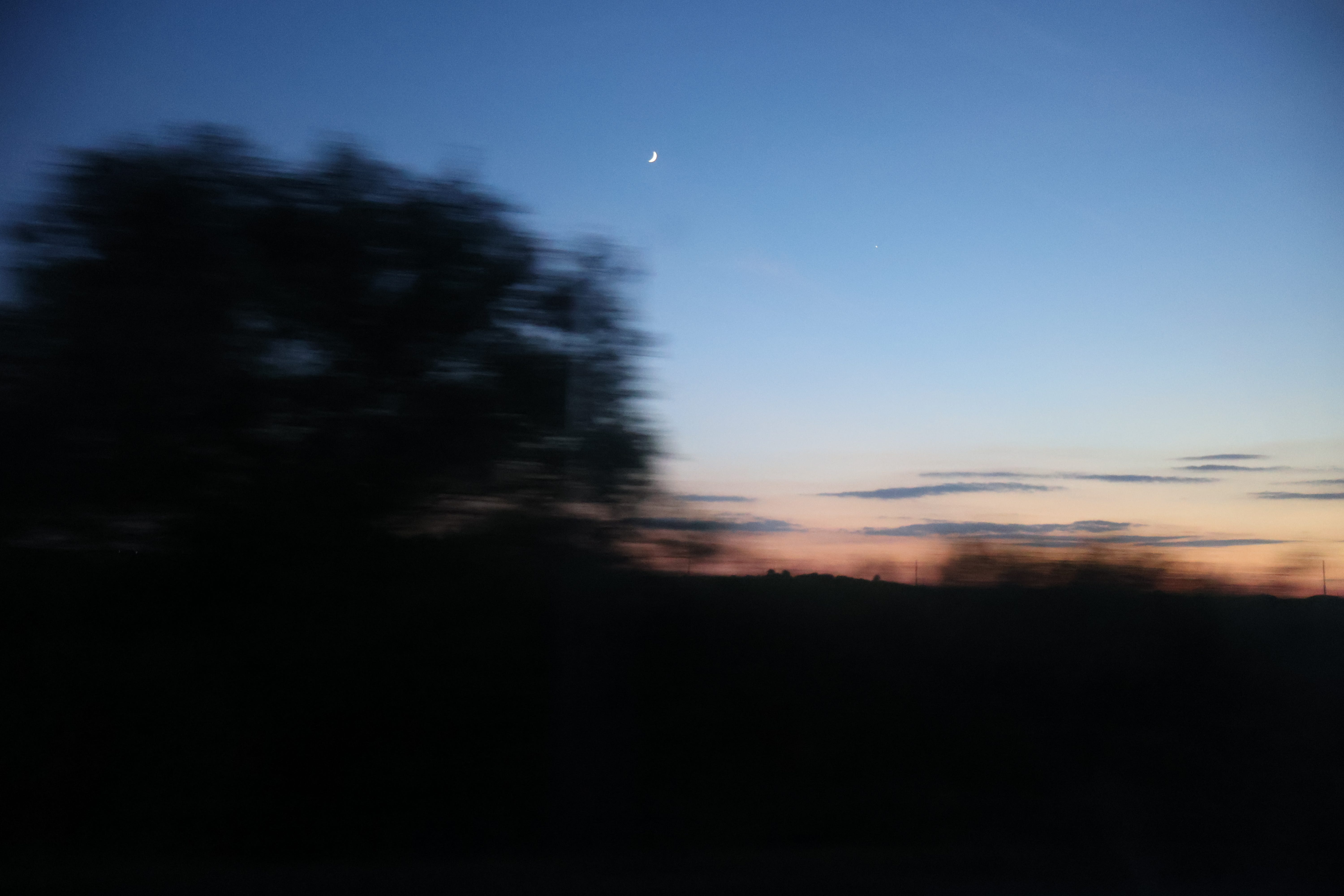
I wondered at that moment why that particular time and place made me experience life more clearly and more faithfully. Ever since I returned home from my travels, I have revisited these photos and moments again and again, and I have come across three ways of partly explaining this experience:
The prospect and refuge theory
Prospect and refuge theory, introduced by British geographer Jay Appleton in The Experience of Landscape, proposes that we are drawn to spaces where we can observe our surroundings while remaining sheltered, such as window seats, covered terraces, quiet corners, or, in this case, a moving car.
A literary sense of place
As a writer of place, I am always imagining and reimagining the places I visit, and at some point during every journey, I find a rhythm that feels right, a rhythm of observing and taking notice. I had never thought about the ways in which writers create a literary sense of place until recently, when I came across Meg Mundell’s paper Crafting “Literary Sense of Place”: the generative work of literary place-making.
In the paper, Meg Mundell introduces the POET model, which refers to the “place-oriented experiential techniques” writers use to create a vivid literary sense of place. The model identifies five overlapping modes: (1) retrospective techniques rooted in memory; (2) immersive encounters with place; (3) collaboration with others; (4) the vicarious inhabiting of another person’s perspective; and (5) nebulous techniques drawing on dreams, intuition, and the imagination.
Beyond the immersion of that car drive into the night and the remoteness of that land, there is something else that could have added to that feeling of “ancientness”: the nebulous, the awe experienced when seeing such places.
However, it is fair to say that dissecting a literary experience of a place into fixed pieces ignores something difficult to pinpoint, something fragile and ephemeral, something that is lost in translation, and only understood in lived experience.
The honesty of evening light
In his video-essay “Edward Hopper, Edward Cullen” , essayist Aaron Vartiainen speaks about the serenity of twilight and the fact that humans are not the only animals to experience this time of day as safe and comforting.
For example, some forest animals can camouflage themselves better in this type of light and come out of the forest to find food in the meadows, more aware of predators while also somehow hidden by the light. Predators, on the other hand, can also benefit from this type of light while hunting.
This type of light is naturally comforting in our world, a transition time between the chaos of the daytime and the stillness of the night. There is no other time of day when I feel the rhythm of the world better, and places, all places, feel more honest.
I am still mapping my understanding of these chaotic and sometimes hushed worlds around me, searching for ways to encounter their nebulous states more often. All I know for certain, for now, is that such places carry a particular presence: the here and now feel right and true.

Copenhagen, August 7-9
I will be in Copenhagen next weekend for the Emergent Ventures Unconference, from August 7 to 9. If you are a reader based there and would like to meet, drop me an email or a message here.
New York, August 8
New York–based readers: Eric Chung is organising a walk on Saturday, August 8, from the East Village to the Hudson River, ending near Little Island and Pier 57. You can RSVP here.
Onwards,
Patricia